Tags: #core-framework #computational-lens
What It Is
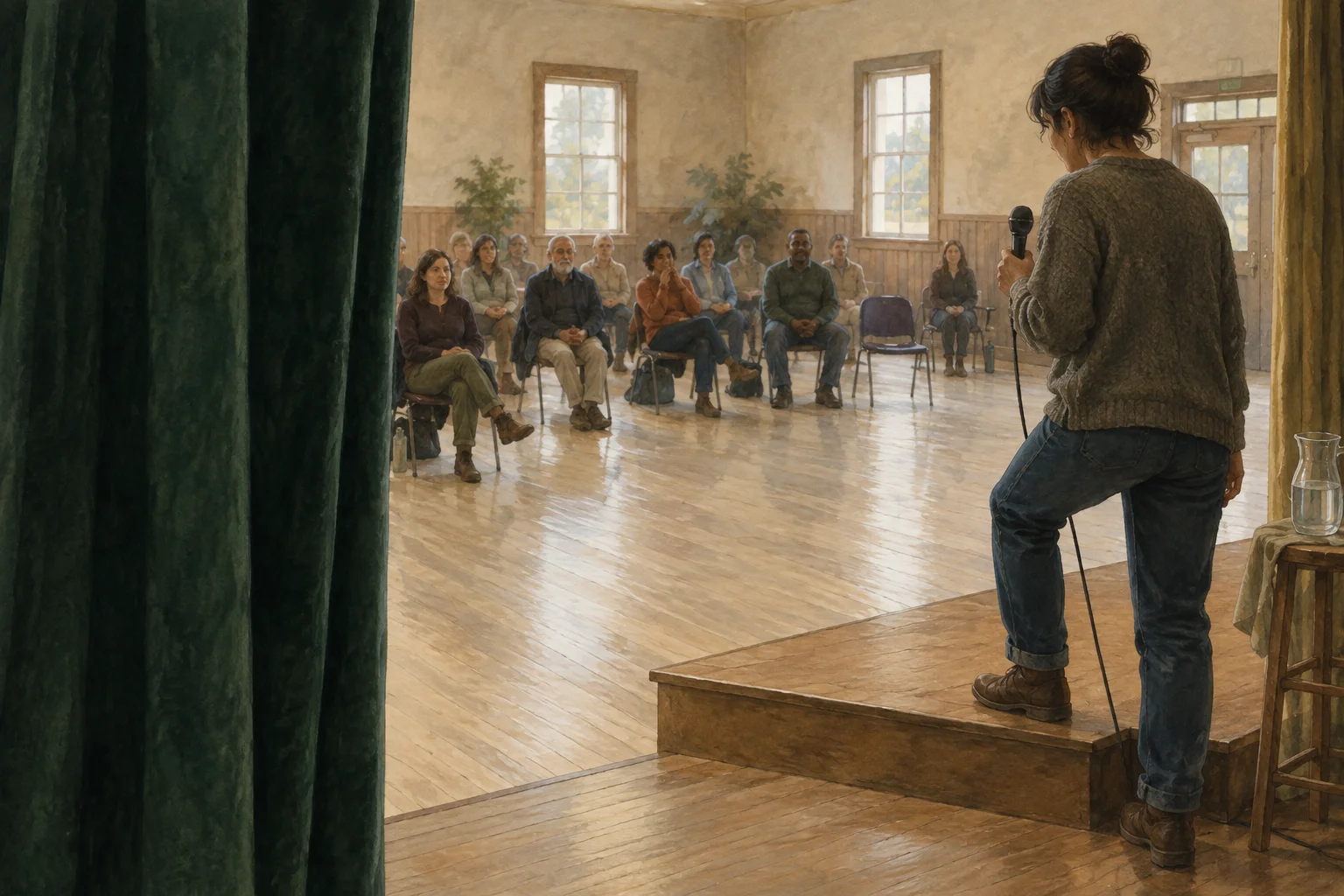
Asking someone out can feel impossible even when you can walk over and speak. Lifting 500 lbs without training can also feel impossible, but a change in how you think about it does not supply the missing strength.
Representational constraints belong to the mental model of what can be done. Real constraints belong to the system's actual capacity. Both can appear as "I cannot do this," but they respond to different changes.
A representational barrier dissolves when the action becomes something the mind can encode as executable. A real limitation persists through that change in representation. Confusing the two either rules out something already possible or produces repeated attempts at something the current system cannot do.
A closer look
Two kinds of constraint
Both can feel like impossibility. The article asks what kind of test or intervention would distinguish them.
Read this diagram
Compare A limit in the representation; A limit in actual capacity.
The Mechanism
The computational and neural terms here are a lens developed from N=1 observations, not literal neuroscience claims.
Conscious experience presents the simple alternatives "I could do X" and "I cannot do X." Those alternatives conceal the mechanism producing the answer.
With a representational constraint, the action does not appear in the available possibilities. Threat assessment may classify it as dangerous, the sequence for carrying it out may be unfamiliar, and that unfamiliarity raises its perceived cost. A reframe changes the representation and makes the action available.
With a real constraint, a biological, physical or resource limit remains. Doing X may deplete the capacity needed for Y. Time and priorities may compete for a finite budget. A previously available procedure may have deteriorated through disuse. Changing the representation leaves those conditions in place; changing the system is required.
Examples: Representational Constraints
Asking Someone Out
Before the reframe, approaching someone is classified as impossible. Social risk and possible rejection dominate the assessment even though the body can speak and approach.
Reconsidering the threat changes what is available: rejection is survivable, and never asking has a cost too. The body and situation remain the same while execution becomes immediately possible.
A single reframe followed by immediate execution is the test for a representational constraint.
Cold Approaching / Public Speaking
Uncertainty about the social sequence and a threat to status can make either action feel impossible. Recognizing that the physical capacity already exists changes the assessment. When the action becomes executable without physical training, the barrier was in its representation.
Examples: Real Constraints
Working Without Sleep
"I need sleep to work" can be replaced with "I can push through tiredness," but the attempt still encounters the biological requirement. Prefrontal-cortex function degrades and performance collapses.
The reframe did not change the available capacity. A reframe followed by an attempt that still fails identifies a real constraint.
Lifting 500 lbs Untrained
Changing "I'm not strong enough" to "I can do anything I set my mind to" does not change the muscle tissue. The attempted lift still exceeds physical capacity.
Learning Quantum Physics in One Day
Replacing "That's too complex for one day" with "I'll just focus intensely" leaves two limits intact. The complexity exceeds working-memory capacity, and a day provides insufficient time for the required circuit formation.
The Confusing Middle Ground
Most situations contain both kinds of constraint. Determining how much comes from each requires testing, and the test can consume resources needed elsewhere.
Example: 2-Hour Daily Gym Sessions
A daily 2-hour workout can have several representational barriers. You may have no prior experience of it, no procedure for what the session contains and no peers who make it seem normal. The belief that it will destroy work capacity may itself affect what happens.
There may also be real limits. Strenuous exercise depletes glucose and neurotransmitters. Willpower allocated to work may have higher expected value. Limited runway can make launching work more urgent than longer training, and the first 60 minutes may produce more value than the next 60.
An experiment could distinguish these explanations, but its cost depends on which one is true.
| Test Duration | Cost if Real Constraint | Cost if Representational |
|---|---|---|
| 1 week trial | Lost work capacity on limited runway | Paid testing cost but gained capability |
| 30 day trial | Severe work deficit, potential business failure | Full circuit installation, new baseline |
| No test | Maintain current architecture, unknown ceiling | Never discover expandable capacity |
The decision is whether the possible gain is worth the testing cost under the current constraints.
Why Familiarity Is a Massive Moat
An actor who trains for 2 hours daily is not starting from the same state as someone attempting it for the first time.
The actor has years of trained exertion, automatic exercise procedures and a calibrated sense of what is difficult but sustainable. Peers make the schedule familiar. A trainer, chef, cleared calendar and recovery protocols support it. The action is represented as "This is normal, obvious, what I do," and automatic execution keeps its cost low.
Without that history, the workout sequence is uncertain. It is hard to distinguish sustainable exertion from damage, the behavior has little social precedent, and cooking, planning and recovery must all be managed without support. "This seems impossible / extremely difficult" reflects a different starting system, with a higher execution cost.
Familiarity supplies procedure, social proof and calibration of bodily signals. These change whether the same action feels normal or extreme.
"I could do that if I tried" can miss those differences. It compares an unfamiliar state with a trained one as though effort were the only variable. Years of circuit formation and support infrastructure are also part of the capacity being observed.
Distinguishing Representational from Real
A representational constraint responds to a reframe or exposure while the physical capacity is already present. Similar people can perform the action immediately after that change. The apparent impossibility comes from threat assessment rather than a physical limit. Social actions, public speaking, asking for something and trying a new domain are examples.
A real constraint persists after the mindset change. Physical, biological or resource limitations remain, and other people need training, infrastructure or time to acquire the capacity. An attempt reveals failure rather than only fear. Sleep, energy coupling, skill requirements and time limits belong here.
Most situations combine unfamiliarity or missing procedure with actual limits in energy, time or competing priorities. Testing estimates that mixture. Its value depends on whether knowing the answer is worth the experiment.
The Testing Cost Problem
Empirical testing is necessary to know which kind of constraint is present, but an experiment is not free.
A 30-day trial uses time to install the routine and assess its sustainability. It consumes energy that cannot serve other priorities, forgoes whatever else those resources could have built, and risks paying the cost without gaining capacity if the constraint proves real.
Testing is attractive when removing the barrier would unlock a valuable capability, failure would be cheap and recoverable, resources are available, and the existing capacity is insufficient for the goal.
Deferring the test makes sense when failure risks the business, health or relationships; previous observations already suggest a real limit; the current arrangement meets the goal; or resources leave no room for an experiment.
Strategic Application
When You Suspect Representational Constraint
The case is strongest when the action has never been attempted, no clear physical barrier is apparent, similar people do it routinely, and the resistance is emotional rather than tied to an identifiable limit.
A single attempt or a 1-week trial can provide a low-cost test. Someone who has done it may supply a useful reframe, and a concrete sequence can resolve the uncertainty about how to begin. If execution suddenly becomes possible, the original barrier was representational.
When You Suspect Real Constraint
Repeated failed attempts, an identifiable resource trade-off and observations that X depletes Y support the case for a real limit. The fact that successful people needed training, time or infrastructure provides further evidence.
The response is to take the constraint seriously and change the system: build support, revise priorities or work within the present ceiling. If the action remains impossible after those changes, the constraint is likely real.
When You're Uncertain (Most Cases)
The comparison weighs the gain if the barrier proves representational against the cost if it proves real. Available resources, earlier observations and the highest-value current goal determine whether the test deserves priority.
The available choices are to test now, test later or accept the current ceiling. Uncertainty alone does not determine which choice is best.
Why Effort Feels Fungible (But Isn't)
The experience of one self with general willpower can make capacity seem transferable: "I succeeded at gym, so I have willpower, so I should succeed at work."
The model here separates the training states. A gym_circuit with 20 days of training has installed pathways and low activation energy. A work_circuit that has been dormant for 70 days has degraded pathways and high activation energy.
Success in the first does not establish capacity in the second. They are different circuits with different histories, so the training does not transfer.
"Hollywood actor works out 2 hours daily, why can't I?" makes the same assumption about interchangeable effort. The actor's exercise_circuit has years of training. The difference can include both unfamiliarity, which is representational, and actual energy or time costs, which are real.
Connection to State Machines and Activation Energy
State machines describe the loading and execution of behaviors. A representational constraint keeps a state transition out of the available possibilities. Asking someone out may not appear as an executable transition until a reframe changes that representation.
A real constraint concerns the actual cost of the transition. The activation energy or resource cost of moving from work_state to 2hr_gym_state may exceed the daily budget regardless of how it is represented.
An unfamiliar transition can also be genuinely expensive. Familiarity reduces its perceived cost without necessarily reducing the actual resource drain.
Connection to Skill Acquisition
Skill acquisition builds procedural memory and circuits over time. Missing procedure can make an action appear impossible even when a reframe and one attempt would reveal an existing capability.
Other skills require 100+ hours of deliberate practice. A reframe does not perform those repetitions or supply the time they require.
Public speaking contains both. Threat assessment and unfamiliarity can dissolve through a reframe, while eloquence and clarity still develop through practice.
The Consciousness Illusion
Generating the thought "I could do anything" has no cost, and consciousness hides the underlying conditions of execution. Acting requires trained or trainable circuits, a budget of time, energy and willpower, and room among competing goals.
That difference makes "you could do anything" true as a statement about long-term mutability and false as a statement about immediate capacity. The computational comparison is to a Turing-complete system over long timescales: with infinite time and resources, any state appears reachable.
The current decision still has finite runway, finite daily willpower and constraints that limit which modifications are viable now. Representing an action is different from having its execution resources available.
Practical Debugging Protocol
The first step classifies the barrier. Never having tried the action suggests a representational component. Existing observations supply evidence to trust. Sleep, energy and time identify possible real limits; social threat or novelty identifies a different source of resistance.
The second step compares the cost of discovering a real limit with the gain from removing a representational one. It also checks resource slack and whether the experiment serves the highest-priority goal.
The third step chooses among four responses. A high-value, low-cost test with available resources can happen immediately. A promising test can wait behind more important work. Strong evidence of a real limit and high test cost favor accepting the ceiling. A reframe or exposure can also be tried before committing substantial resources.
The result then determines the diagnosis. Immediate dissolution indicates a representational barrier. Success after training indicates a mixed barrier: unfamiliarity plus a trainable skill. Failure despite training indicates a real constraint and directs attention toward changing the system.
Related Concepts
- Activation Energy distinguishes the perceived cost of unfamiliarity from the actual cost of detraining.
- State Machines describes which transitions are represented as available.
- Skill Acquisition develops familiarity and procedural memory.
- Willpower concerns perceived and actual resource costs.
- Expected Value explains the probability estimates a representational constraint can distort.
- 30x30 Pattern describes the time needed to establish a routine.
- Moralizing vs Mechanistic explains the error of treating a real limit as a character failure.
Key Principle
Reframes change what is represented as possible. Training, resources and changed conditions alter what the system can actually do. Most barriers contain some of each, and evidence from earlier attempts can reduce the need for expensive new tests.
"I could do this if I had their training/infrastructure/familiarity" does not imply "I could do this right now if I just tried harder." The first allows for a resource-intensive change in capacity; the second overlooks both the missing familiarity and the actual constraints.
The framework came from Will's experiments. The gym barrier dissolved after a reframe and 16 days of exposure. Restarting work after dormancy required 30-day progressive loading. The 2-hour workout question remains unresolved because the possible gain has to be weighed against the testing cost. These cases keep the distinction tied to observations rather than to the feeling that an action ought to be possible.