
The library
131 articles on behavior, learning and systems.
131 articles

30x30 Pattern
A repeated visit can become familiar in a way the first visit cannot predict.

Activation Energy
A short opening sequence can make the next step easier to begin.

Addiction
Changing a social routine can mean making room for connection, not simply removing a place to go.

Afferents
A system needs an incoming event to wake it—and somewhere useful for its output to arrive.

Agency
Express a small intent, see what happens, and use the result to choose the next move.

AI as Accelerator
Faster prototypes become useful when someone outside the model can push back on them.

Algorithmic Complexity
Narrow the candidates before comparing them.

Anxiety
An actual response gives you something a rehearsal cannot.

Artifact-Mode
The first contact is the made thing in someone’s hands.
Attention as Dynamic Routing
Focus can be approached as a question of what gets routed through.

Autodidact Framework
Experience gives the later explanation something concrete to explain.
Basin
A useful catchment has a boundary, and eventually an outflow.
Be the Sun
The work moves from improving the source to building what can catch its output.

Bounded Search
Exploration needs a reserve for returning with what you found.

Branching and Convergence
The fragments become one work through the merge.

Brand Invisibility
A separate publishing surface can make another real attempt easier to send.

Buffs and Debuffs
A useful window can pass if the next activity never begins.

Clarity
The next move becomes possible when you can see what it connects.

Coherence Is Not Evidence
Close the source and find out what you can actually execute.

Commitment
Someone waiting changes the cost of walking away; a useful commitment still allows review.

Communication Framework
Begin with something both people can see, and let the inference become shared.
Composition
A stable part with a fitting interface can become the beginning of a larger structure.

Compounding Artifacts
This session leaves behind something the next session can use.
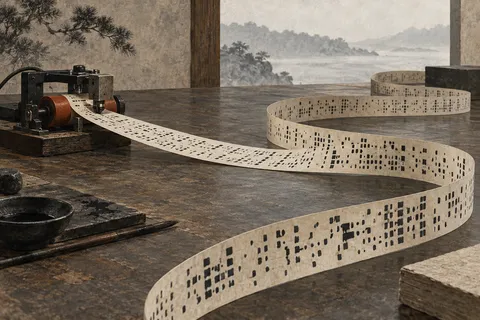
Computation as Core Language
A state, a rule, and a next state: the article’s starting point for a common language.

Computation as Physical Causality
Computation has a place, a material, and a heat bill.

Computational Literacy
Let the learner see a rule produce a consequence before naming its syntax.

Consciousness as Self-Modeling Systems
The next action depends on a model built from the system’s own observed behavior.

Container Design
The boundary becomes useful when the practice is actually inside it.

Counterparty
The loop changes when someone else is waiting for the thing.

Courage
Fear can remain present when the next move is still worth making.

Cybernetics
A control loop needs a sensed condition and a way to change it.

Demons
A boundary can contain a recurring pattern without making it disappear.

Digital Daoism
A floating needle offers a small example of alignment with an existing force.

Discipline
Preparation puts the next action within reach.

Discretization
A clear stopping point makes room for rest and another unit of work.

Dopamine Systems
A familiar cue can start the wanting before the reward arrives.

Effective AI Usage
Use AI around the experience, and give the experience your attention.

Epistemic Contamination
A polished reference can make its categories feel like your own.

Error Signal
A target and a measurement make the next correction visible.

EV Sensor Calibration
Mary’s room asks what a first encounter adds to a complete description.

Execution and Resolution
An idea becomes a game someone can play.

Expected Value
A finish you can reach today makes the reward less remote.

Experience Extraction
The surface story is only one part of what an experience can reveal.

Focus
A familiar cue can mark the beginning of a work session.

Forcing Functions
The constraint changes what access requires, even when remembering is hard.

Free Will
One visit is an event. A record of visits lets you inspect the pattern.

Generative vs Retrospective
From inside the walk, there is another corner to explore—not a nine-hour total.

Gradients
An error becomes useful when it tells you what to change next.
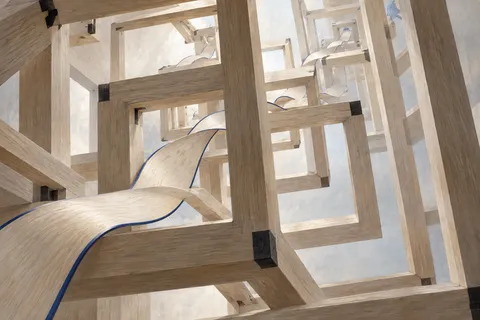
Grammars as Causal Structure
The available connections determine which structures can be expressed.

Grit
Continuing well can include deciding what to cut away.

Hacking Reality
Ordinary controls can reach unexpected behavior when you understand the machine.

Ignition
A strong engine can still need a separate machine for its first turn.

Information Architecture
Keep the information available. Choose when the task needs it.

Information Theory
Payment answers a different question than polite interest.

Intelligence Design
An easier check can help select among costly attempts.

Intelligence Is Water
The same flow does different work in a different set of openings.

Invokable Structures
Some actions leave a structure that can keep working after the action ends.
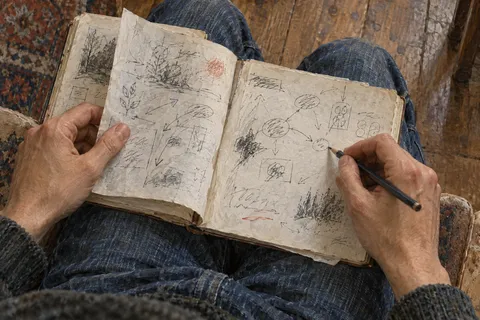
Journaling
The page holds the earlier thought while you work on the next one.

Ladder of Agency
A practiced capability can become something another person learns to carry.

Language Framework
The useful question depends on what kind of system you are listening to.

Laziness
Low energy is information to examine before making a judgment about character.

Legibility
The state was already changing; an instrument makes it readable.

Lockfile
Carry the procedure, examples, checks and failed attempts together.

Macrostate Engineering
The example asks whether a different meal can satisfy the same craving.

Magic
A name for the mystery becomes less useful once you can investigate what produces it.

Memory
A physical arrangement can retain a state after the action that set it ends.

Memory Is the Substrate
The next flow inherits the channels that remain.

Mode-Lock
A little contact can become a mode that holds your attention.

Modeling
The example is the adult’s ordinary behavior, visible without a lecture.

Moralizing Language vs. Computational Mechanistic Explanation
A specific fault gives you something to inspect and change.

Motivation
A working feature makes progress concrete enough to notice.

Nature Alignment
Keep the restful setting; give it a different default action.

Neural Positivism
The missing mug is noticed against an expectation of where it should be.

Night Protocols
Leave one concrete starting point for the morning you will meet tomorrow.

Nutrition Architecture
Preparing an option in advance removes one decision at the moment of eating.

Optimal Foraging Theory
Staying and moving both have costs when the current patch is running out.

Order of Determination
The narrator follows the scene that has already been determined.

Paths and Trailblazing
The route remains visible after the reason for its detour changes.

Pattern Matching as Fundamental Computation
Recognize a structure, bind it to a value, and use the match to make a change.

Pedagogical Magnification
The useful scale depends on what you are trying to understand or change.

Planning Euphoria
The plan can feel finished while the work it describes has not begun.

Predictability as Optimization Substrate
A familiar starting arrangement leaves room for unfamiliar work.

Predictive Coding
The article’s gym example connects an expected reward with a repeated act.

Prevention Architecture
Moving a cue changes what the work setting asks you to resist.

Probability Space Bending
One act can change the conditions the next act encounters.

Procrastination
A clear place and a small first act can make the start easier to find.

Programming as Causal Graph Construction
A present connection can make a future event produce its consequence.
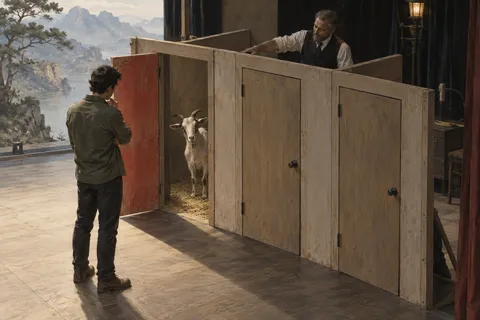
Provenance
The same reveal can carry different information depending on how it was chosen.

Question Theory
A bounded question follows a particular connection to something you can change.

Ratchet
The catch holds the step already gained; the next step still needs an advance.

Reality Contact
Trying the lift supplies feedback that the imagined workout cannot.

Reality Contact Metabolism
The map can guide the walk; being there supplies a different kind of detail.

Reliability
When the familiar operation holds, attention can move to what comes next.
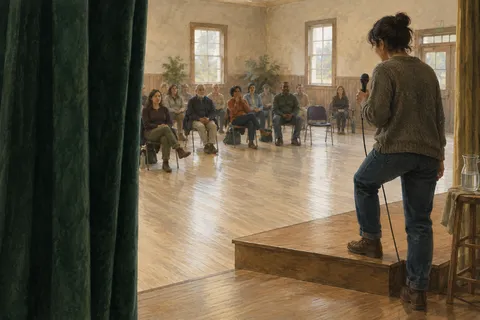
Representational vs Real Constraints
Some barriers need a test; others need more capacity. The feeling alone does not tell you which.

Resilience
Recovery is easier when the next load does not all land on the same person.

Rhythm
The alternation is how the movement happens.

Salience
A clear beginning and ending give attention something it can recognize.

Search vs Planning
The recipe gives a starting point. The next adjustment comes from tasting.

Selection over Design
The lasting shape emerges from what gets room to grow.

Self-Control
What comes home determines many of the choices that follow.

Signal Boosting
A recognizable body of work can carry a signal that one isolated attempt cannot.

Signal Theory
Leave room for the work that keeps drawing your attention when nobody is watching.

Skill Acquisition
One passage, one part to listen for, one adjustment before the next attempt.

Social Graph
A useful connection lets people in different circles do something together.

Spell-Packet
An instruction earns its place through the next action it makes clear.

Startup as a Bug
A plausible signal is a reason to test, not a reason to spend the whole search there.

State Machines
A prepared next step changes which transition is easiest to make.

Statistical Mechanics
A new pattern begins locally, then changes what the whole surface is doing.

Structure Over Request
The separation determines what each pass can see and what must reach the review.

Superconsciousness
For a small decision, ending the loop can matter more than finding the best answer.

Superposition
A complicated volume can still be one connected surface.

Systems and Emergence
Each driver has somewhere to go. Together they have made it harder to move.

Taste Compilation
The next piece can inherit a judgment only if something still holds it.

The Accrual Substrate
Capture gives effort somewhere to land; retrieval brings an earlier observation back into use.

The Agent Body
The replaceable computation sits inside a structure that keeps the history and connections.

The Braindump
Put the thoughts somewhere you can look at them before deciding which one matters.

The Clarity Bear
One useful question can reveal the constraint a generic answer would miss.

The Golden Orb
Some distinctions become available only when your hands meet the material.

The Guided Spike Workbook
An opinion about reconnection starts with an actual disconnect.

The Mastery Ladder
If you keep reaching down to fix a layer, it is still carrying the next one badly.

The Matrix
Looking up makes room for details the feed did not choose.

The Membrane
The operator can leave while the system’s state remains.

The Meta-Pattern: Character Traits vs System Outputs
The repeated result follows the setup that produces it.

The Precondition Trap
The first real instance can reveal what its supporting system needs to be.
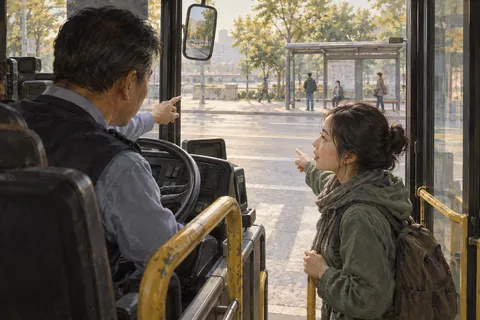
The Simulated Other
The real answer can contain something your rehearsal never did.

The Upstream Router
Pause the stream and describe this plant. The change of attention is the experiment.

Tracking
One reading is an event. A run of readings starts to show a pattern.

Translation Guide: Moralized Terms → Computational Mechanisms
A useful translation ends with something you can arrange differently.

Willpower
Spend the effort on a change that makes the next attempt less demanding.
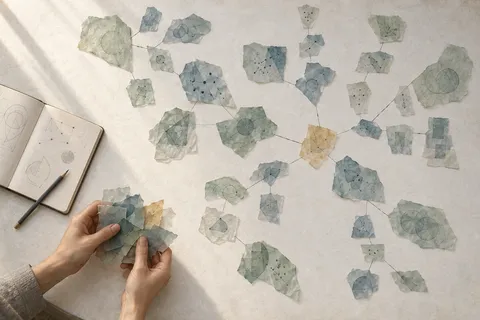
Working Memory
Keep the whole on the page while you work on one part.

Zeitgebers
The day outside gives the rhythm inside a reference.